Wednesday, May 22, 2013

PRACTICES | 慣習

Identities and subjectivities are shaped by the culture in which we live as much as the culture of a place is shaped by the individuals within it (Donovan, Spring 2013).  This recursive relationship is particularly interesting when looking at social practices in Japan.


Emphasis on Work and Achievement as a Social Practice in Japan


Karōshi |
過労死
Karoshi is a term for a phenomenon largely associated with Japanese men that loosely translates to 'death from overwork' in English.

Karoshi


When looking at karoshi as a social practice, understanding the factors that influence men in Japanese society to work so hard is key.  Men are taught from a very young age that achieving a high level of financial security and social class correlates with esteem in society.  The pressure to compete and is intense, leading many men to ignore almost every other aspect of their lives in exchange for success.  Source

Further Reading:
Are the Japanese Worked to Death?
Japan's Killer Work Ethic
Karoshi: Death By Overwork in Japan


WORK, HOBBIES, AND HIGH STANDARDS

The intense work environment of Japanese culture is just one element that influences national trends in Japan. More than ever before, Japan is witnessing the growing trend of its young people remaining single. Despite discriminatory wage differences among genders in Japan, women are achieving standards of living that do not require a partner to be the bread winner. In what some are calling a passive rebellion, many men are choosing not to pursue demanding career paths and traditional home lives.

Girlfriend and Boyfriend Pillows Become Popular Items Among Japan Singles


Monday, May 20, 2013

IDENTITY | 同一性


Identity is an individual’s comprehension of oneself. Social class, race, and gender are all examples of what comprises one's identity. Subjectivity takes this concept one step further, placing identity within a larger social context. Interrelationships, projections, and stereotypes are examples of subjectivity (Donovan, Spring 2013). This post will provide examples of factors that shape and influence identity in Japan today.


Factors that Influence Identity

Japan and the Global Gender Gap


This video supports reported statistics regarding women in the workplace and education.  Despite the fact that women make up 41% of Japanese university populations, they still earn just more than 50% of male co-workers in similar roles, and are vastly underrepresented in leadership positions.  Japanese women also experience longer work days, approximately 3-10% longer than men, 57% of which is non-market oriented (Seager, 2012).

Education/Opportunity

I don't interfere with my husband's business, not with my mouth, hands or legs."
-Kumiko Hashimoto, wife of former Japanese Premier


Why is this relevant when considering identity and gender?  As stated in the video above, Japan has the second largest economy in the world, a highly educated population, yet little economic or political power rests in the hands of women.  Understanding that ascribed gender roles have an impact on society at large, but also on individual identity is important.  When we look at the history of Japanese views on gender roles, we can begin to understand why individuals react the way they do when traditional economic and social structures change.

Human Disposability
Japan's economic decline has impacted men and women in ways push the issue of identity and the larger context of subjectivity.  As with any dramatic change in a society, individuals are being challenged to rethink identity and agency within a social structure that serves certain traits over others.  Read the article, accompanied with the photojournalistic work of Shiho Fukada here.


Further Reading:
Sharing of Housework and Childcare in Contemporary Japan
Japanese Unemployement


Wednesday, May 15, 2013

DISCOURSE AND REPRESENTATION | 談話と表現


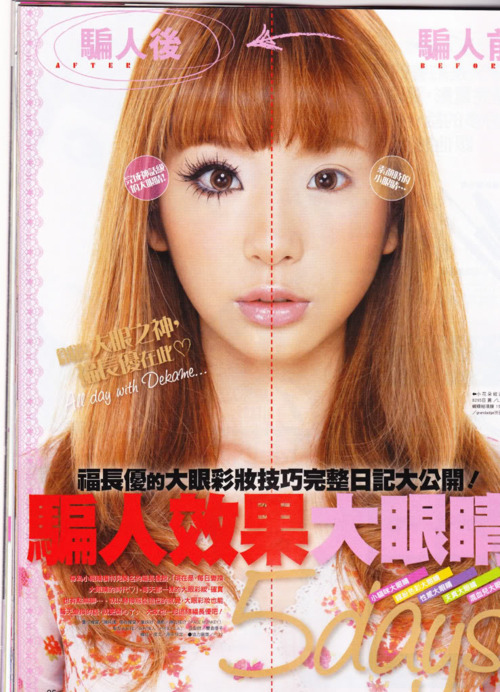
Discourse and representation of gender are communicated in different ways throughout every culture. We use discourse to shape our ideologies through many different regimes of truth (Donovan, Spring 2013). Japan is known to have a distinct perspective on fashion. Fashion serves as an insightful cultural lens which can be used to draw conclusions about a culture's perspective on gender. This post explores how different facets of fashion media shape the discourse regarding gender and representation in Japan.

Bihaku


Japanese culture has long held the cultural preference toward lighter skin tones.  Historically, the preference has originated from the idea that women with darker complexions were likely laborers of lower classes who worked in the sun.  Since the 1980s, the introduction of 'whitening' products by the cosmetics industry has created a boom in emphasis of this trait.  Women use these products seeking to express higher social status, youth, beauty and desirability which are perpetuated by the media's portrayal of Japanese beauty. 


Bihaku Advertisement


Gyaru
Source
Many notable fashion trends have originated from Japan and cycled their way through western culture.  Typically these creative, colorful trends reflect the excesses of Japan's robust economy, which allows for the region's fluid and rapidly changing aesthetic.  This was the case with the Gyaru movement, which started as a rebellious look for privileged young Tokyo school girls.

                                           Source                                                                             Source

Mass media exposure to trends usually triggers the rejection of the style after a period to make way for a new invention, but Gyaru was co-opted by non-urban working-class youth, who used it to defy traditional Japanese standards of beauty.  


Image source links: Ganguro Girl 1, 2, 3, 4

Though the look may appear to be an attempt to emulate western standards of beauty, featuring tan skin and blonde hair, the ganguro fashion movement is actually an act of defiance against traditional forms of Japanese beauty.  In the past, youth fashion trends catch on and flame out within a span of 5-10 years, but gyaru continues to evolve and serves as commentary on the culture's awareness of the influence media has on public perception of beauty.


Yaeba


The New York Times recently reported on a cosmetic trend in Japan, where women seek to have dental implants that enhance imperfections in their teeth.  Depending on one's perspective, this trend may seem cute and embracing more natural forms of beauty, but is also seen as another way females are infantilized to please a paternalistic society.  

Further Reading

Todd Joseph Miles Holden is a social scientist who has studied the influence Japanese fashion media has on gender and identity.  His work on the subject can be found below.

"Through a large array of intentional communication strategies, fashion magazines (whether male or female) reduce gender classes (but women, in particular) to types capable of fitting into or bridging cohorts. Fashion is not a static entity. It exists not only on pages of magazines, but also out in the world: on the streets, in offices, shop windows, on public transportation. It is a living topic that is shaped and influenced by so many factors beyond words and images in commercial media. This serves as a caveat mitigating wholesale acceptance of the conclusions presented on these pages. In Japan, there are few media more robust and communication-full than fashion magazines. They are rich texts brimming with an assortment of profound, extremely complicated social content." -Holden


Wednesday, May 1, 2013

GENDER IN JAPAN | 漆器中のジェンダー


This blog seeks to explore the various aspects of geographic perspectives on gender in Japan.  Visual representations of gender, statistical data, and depictions of cultural practices and discourse will be used to focus on how gender perspectives shape the societal structure of Japan and the lives of individuals within it.

Photo Credit: Happy Couple